Friday, April 11, 2014

Handling a Bad Yoga Teacher

We've all had one in our lives. It seems impossible to get through the world of education without having to deal with a bad teacher. Whether its a lack of knowledge on the subject or a lack of passion and personality, it can make the experience of learning a challenge.

I recently spoke with a friend who is going through a yoga teacher training. When she first started she was so excited about this new chapter in her life. However, due to her teacher, the experience has taken a turn for the worst. Her teacher has a different opinion about a certain topic and instead of talking openly and being neutral, the teacher embarrassed her in front of the other students. Doesn't sound very yogic to me.

Yoga is famous for some of its bad teachers. Power can go to your head easily when you are adored by hundreds. Narcissistic behavior is alive and well in yoga. My tradition is the only way and it must be done like this, no tweaking. How wrong is that? I believe in tradition and I think it's great. But I also believe in change and the amazing possibilities that it can produce. Many of the popular types of yoga out there were created by people who thought outside of the box. They took the knowledge they learned from their teachers and made it their own.

I get that tradition is important to some people, but to press that on your students and squash their creativity and exploration as a student is wrong. It's yoga people, not the army. You can't order your students to do things, nor should you embarrass them because of their free thoughts. One of the beautiful things about yoga, is breaking out of the shell that you've put yourself into and find your true self. If we all do the same practice, how are we being true to ourselves.

So how to deal with that yoga teacher? First off, take the time to ponder if it's even worth dealing with. You could choose to let the situation go and move on. When we confront people it saps our energy, an energy that could be better spent looking for another class. If you're stuck with your current teacher, create a mantra. A positive phrase that you can repeat when you're feeling the pressure. Know that when your schooling is done that you are free and you won't have to deal with this person ever again. Take what valuable lessons you can from the situation. Make sure that you never make a student or other person feel like your teacher made you feel.

If you do choose to confront the teacher, know what you're going to say. Have an example of a situation that upset you. Don't blame them or tell them how they could fix it, but find neutral words to talk to them and explain how their actions made you feel. Perhaps the teacher is unaware of what they've done or maybe you talking to them will shed some light for them on how their teaching style is perceived by other people.

Don't go into this situation expecting things to change. Keep an open mind that it could go either way. Stay present. A hostile situation is never easy so you'll need to pull yourself away from the negative. Focus on the good parts of the class or training. Draw your senses inward and focus on what you're feeling and thinking. If you feel tension rising in the body, do some breath work to try and calm down. Don't let the situation consume you, it defeats the purpose of you going to yoga in the first place. Take all the positive and leave the negative.

Every situation in our life is a teaching moment. Dealing with a difficult person who is helping to shape your life is challenging. Remember that people are the way they are because something made them that way. Your teachers issues are theirs, not yours. Don't let them fall on your shoulders. Once you leave that class, leave the problems with it at the door and go out into the world and make your unique mark.

Wednesday, April 9, 2014

Getting Your Groove Back

I read a great quote this morning. It's a philosophy called the Pura Vida. "Everything is good, life is beautiful, go with the flow, surrender to what is, let things go, enjoy your life." Perhaps it hit me as my life's in turmoil right now because we're moving. I'm a Vata so change and an uncertain future is difficult for me. But this quote simply states that I'm making my own chaos and stress. I'm choosing to be unhappy and scattered.

I tell students in class all the time how most of the pain and tension in their body is coming from their mind. Our thoughts and emotions physically affect our bodies. We can go through a yoga practice and feel relaxed, only to have the tension creep back in because we never let go of the emotions that led to the tension in the first place. We've created these negative grooves or samskara's in our way of thinking. In order to be happy, we need to get our positive groove back.

Committing to a regular yoga practice is a great way to make this quote a part of your life. When I say yoga practice I don't mean just waking up and doing the poses. A yoga practice should include not only poses but breath work, meditation and at least a 10-15 minute relaxation at the end. Like anything in life, if you just go through the motions, you won't get results.

Everything is good: focusing on the bad is easy. Especially in your practice and life. My knee hurts so I can't do a certain pose. I'm weak so I can't do an inversion. My marriage is bad because I never spend quality time with my spouse. You've got to change those negative thoughts into positive ones. Yes, your knee hurts and you're too weak to do an inversion, but that doesn't mean that's that. You can modify your brain like you modify your poses. Instead of thinking about how bad your relationship is with your spouse, think about ways that you could make it better. Be proactive. Like building strength to get into that inversion, changing our negative thoughts to positive takes time, but change can happen. It's all how you look at it.

Life is beautiful: you just have to slow down to look at it. When I step out of a yoga class my senses are on fire. I feel the breeze, notice the warmth of the sun and just walk around with a smile. I've cleared the tension out of my body and mind allowing me to enjoy the beautiful things in life more because I'm not focused on the bad.

Go with the flow: I love a flow yoga classes. I like linking my breath with my movement, it's almost like a dance. I find when I'm not in a flow class it feels awkward and clunky. The same is true in life. When we don't transition easy, things get mucked up. We fight things that aren't worth our energy. Life is easier if we just go with the flow on things that would take more energy than we have to give.

Surrender to what is: I'm hyper-flexible so there are some yoga poses that I just can't do anymore without causing more damage to my joints. I was pretty upset about this when I first figured it out. A practice I've done for years and love was suddenly going to have to change. I could fight this and be upset about it, but that would only take more away from my yoga practice. I've now adapted my practice to fit my physical needs, I've surrendered to where my body is at this time. I chose to let go of the turmoil instead of fight it and I've now got a new practice I love.

Let things go: what's the point of dwelling? All it does is maintain the negative emotion you felt in the first place. We tend to hold onto these negative emotions because we want an explanation or resolution to the thing that set us off in the first place. Most likely you'll never get that. Do yourself a favor and let go of what irks you. Your body and overall health will thank you. You can't live a happy life if you're holding onto other peoples crap.

Enjoy your life: you should do one selfish thing every day. We tend to do more for others than we do for ourselves, especially if you're a parent. Make sure to do one thing every day that is just for you. Go for a walk, take a class or simply find time alone to read for awhile. The world won't end.

A good yoga class or practice will give you the sensation of how great it feels to completely let go. In class don't just focus on the physical practice but on the breath and releasing the mind. The yoga breath you do and the focusing of the mind are what truly relieves your tension. If you can't let go of the mind stuff and take a deep breath, all that stretching will be for nothing. Let go of all that weighs you down. You have to choose a good life, it won't just happen to you.


Thursday, April 3, 2014

Drishti: Bring Your Life Into Focus

The last couple of weeks have been a whopper. I went from spending an amazing time in the Caribbean with friends to sick for a week with walking pneumonia. In the midst of that, my husband and I had a long hard talk about our future and what we want as far as work and where we're living. A lot of change is coming our way and with being sick I've had a heck of a time focusing. My mind flutters from what the future will hold to how far behind I am with everything because of my illness.

In yoga we use the term drishti, which means to focus. It's used a lot when going into a balance pose. Students are told to fix their gaze, or drishti. Focusing allows them to stay balanced and not fall out of the pose because of the distractions that are all around them.

This same principal can be applied to your life. I can drive myself crazy with all I have to do in the coming months. Worry myself sick on how it will all work out. But what good would that do me? All worry will do is wear me down and make me sick again and cause a strain on my relationship with my husband.

When we're unfocused it drains our prana or energy. Prana is our life force and when it's depleted we're left exhausted and our mental clarity suffers. This can lead us to make bad decisions and leave our emotions in turmoil. Not a great way to live.

Improving our ability to focus just takes practice. It's like when you first started doing yoga and had to learn to breathe properly. At first you had to think about it, but eventually it became natural. You just have to give yourself a gentle reminder to bring the mind back to the task at hand. Don't beat yourself up every time this happens, as it will happen a lot.

If you find your mind drifting to a specific topic, like in my case where we're going to live, make a plan. For example I will write down a timeline of when I hope for things to happen. Communities we want to live in, websites where I can find rentals and keep an open discussion with my husband about how things are going. When you have something that is distracting your attention, it's nice to be able to discuss it with someone you trust. They can help reel your imagination back down to reality.

Drishti Yoga Techniques

  • Meditation: when you're having a hard time focusing, close your eyes and count your breath. Or try a walking meditation.
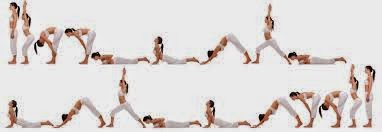
  • Sun Salutation A or B: move through this sequence 5 to 10 times and focus on the breath. Move slow and deliberately.
  • Try a balance pose: nothing helps me focus more than a balance pose. You're so busy trying to not fall over that you can't think of anything else. Soften your eyes and find a spot to focus on either on the wall or the floor. Great poses are tree, dancers, eagle or crow. Any balance pose will work though.
  • Take a yoga class:  If you're really out of sorts you may need a whole class to calm down and come back into focus. You'll also surround yourself with a supportive community that you can possibly talk to about your issues.
No matter the chaos in your life or the unknown future, you can bring your life into focus. You just have to settle your mind. Our minds are funny like that, they will get out of control if we let them. We can harness our prana and direct it so that it benefits us, rather than deplete it, leaving us feeling out of control and unproductive. We just have to focus.


Friday, March 14, 2014

Can Yoga Make You Authentic?

The definition of authentic is interesting. Au-then-tic: of undisputed origin; genuine; not false or copied; real...are you authentic? I wonder about that sometimes. I'm a people watcher and I often question if someone is truly expressing themselves? Is what they show on the outside a true representation of who they are on the inside? A good way to tell is by their body language.

I read a short article about how to see if you're authentic and it asked you four questions.

  1. What's your voice doing? When you're acting natural and in your comfort zone your voice will reflect that. If you aren't, you tend to use a high voice. A sign that you're nervous because you aren't being true to yourself.
  2. What's your body doing? Are you holding tension? If so why? What are you doing, saying, wearing or thinking? Your body knows you're up to something and it's giving you a warning that you need to change because you aren't comfortable with what you're doing or being.
  3. Are you breathing? We hold our breath when we're stressed or uncomfortable.
  4. Are you present or hyper-vigilant? When we're in the present moment we're being true to ourselves. We're looking at the situation for what it is, not trying to change it. When we're in an environment or situation that we aren't comfortable with, we have to be hyper-vigilant in order to protect ourselves. We're unsure of being accepted so we have to stay on top of our charade. 
Authenticity doesn't come easy. We're in a world of fades, something that is cool this week may change the next. Money is a big part of this. It's starts when we're children with kids picking on us because we're different. I often wonder when my daughter, who is now in kindergarten, will have to start dealing with this. We grow into adulthood with this thought that in order to fit in we have to be like everyone else. The kids who did stay authentic were often considered weird or outcasts. It's so sad that our society celebrates this lack of authenticity.

Yoga gives you the courage to be authentic. It does this by giving you the tools to pull back all the layers of false identities that you've gained over the years. You eventually find yourself at your core, your true self and you can see who you really are under all the muck. It teaches you not to be afraid of who you are and that your true friends and family will love the real you. It shows you how important it is to surround yourself with people that accept you and know that it's ok to let go of the ones that don't. Let go of things that don't serve you, that includes people. Check out the Yamas and Niyamas. A good start to living an authentic life.

A lot of emotions flow in a yoga class. People cry, get frustrated and laugh. People are very honest in this setting. You learn over time that it's refreshing to show your real emotions in front of people. Yogi's are well known for the support they give fellow students. We're realistic in the fact that we know everyone suffers and everyone needs help at some point. We won't judge you for your choices, but encourage you to be who you are and give you a helping hand along your journey.

Yoga teaches you about self doubt. A lot of times we're unauthentic because we doubt we'll be accepted for who we really are. Yoga brings you out of your shell and slowly exposes the real you. It's done in a safe environment, without judgment so you realize it's ok to expose the real you. When you're judged, you learn not to take it personally, it's not about you, but that someone is fighting their own internal battle. Make sure you give that courtesy to others. If you don't like being judged, I bet others don't either.

Nurturing environments are important in gaining the courage to be authentic. Don't set yourself up for failure by bringing your true self out to a bunch of people who you know aren't accepting. Have the courage to let those people fade from your life. If they have a hard time accepting you when you're fake, how will they judge you when the real and best part of you comes out? Find people who are like you, who share your interests and ideas. As hard as it is to let go of a toxic relationship, it's even harder to stay in it.

Not sure who the real you is because it's been so long since you've seen him or her? Meditate on it a bit. Try a walking or a seated meditation. Another way to get deeper into your thoughts is to do a cluster chart. Write one thing down about you that you like and circle it. Then any other traits or ideas that pop into your head write down and circle that. A sample of a cluster chart is to the right.

 If you can't think of anything to write at first, just start writing words down that pop into your head, or just come up with something to start, your hair color, what your wearing, how you feel people see you. The creative juices will start flowing. If you find you've written more negative than good things, it's really time to change and find the real you. Being unauthentic makes us unhappy.

Once you have your chart, take a highlighter and mark the traits you find the most desirable. That's the authentic you. Come up with a mantra, a positive saying that you can repeat to yourself when you're feeling unsure about presenting the real you. Like, "I'm living a fuller life as the real me." or something positive to reinforce your authentic self. There will be haters, people who aren't understanding. Remember to let those people go. They're probably just upset that you had the courage to do what they couldn't.

Find a support group, my choice, a local yoga class. Make a friend there that you can talk with. Odds are that they're on their own personal journey. Yoga takes us places we never thought we could go and it's always nice to have a friend along on the journey. Someone you can talk things over with and not feel judged. 

Have you ever come across an old person who is authentic? It's the one that has ice cream smeared on her chin but doesn't care. She laughs as she wipes it off and continues to eat the rest of her cone with a smile. Maybe her hair is a mess or her outfit is outdated, but you know what, she's happy to be alive and healthy. She's grateful for the family she has in her life. She's learned throughout her years that life is too short to worry about the little things. That what's important is enjoying your ice cream and being happy with who you are in life. Please don't wait until you're old to realize this. Find your authentic self today and start living how you want to live now.

Thursday, March 13, 2014

The Legal Future of Music in Yoga

The owner of the studio I work for sent me an interesting email this morning. It was regarding the future of playing music in yoga classes and how it may eventually cost us money. I was shocked at first, but then thinking of all the other legal issues that have been invading the sanctity of yoga, why be surprised at one more.

Music has always moved me. I still remember the music from the first yoga class I took. The songs were perfectly timed with the pace of the class. When I was working hard the music was fast paced and helped me power through. When it was time to relax it was slow and invited me to go deeper into my Savasana. Music allows students to go deeper into their practice. I love using it in my own class and I'm saddened by the thought of not being able to use it because I can't afford to pay for a license.

Some yoga purist think that music shouldn't even be a part of yoga. That it's distracting. You can't fully connect to the breath and the body if your mind is distracted by a song. When I first started yoga I couldn't keep my mind focused on my breath and body to save my life. But I could focus on the music. Over time my attention was calmed by the music and I could move on to watching my breath and listening to my body. Music was my meditation training wheels. Without it, I probably wouldn't have fallen in love with yoga, because to my anxious mind, quiet was scary.

A group called ASCAP (The American Society of Composers, Authors and Publishers) is targeting yoga studios as a source of licensing revenues. Letters have been sent out requiring these studios, who are playing music from artist connected to ASCAP, to purchase a license for the music they're playing. ASCAP"s mission is as follows: "We protect the rights of ASCAP members by licensing and distributing royalties for the non-dramatic public performances of their copyrighted works. Our licenses encompass all who want to perform copyrighted music publicly." According this this, a yoga class is a "non-dramitic public performance".

I support the right to be protected. Music has changed a lot over the years and artists are losing money. However, the music I play in my class I bought. I paid for it on iTunes. I paid the artist. This is true for most yoga studios. Teachers for the most part put together their own playlists on their smart phone and bring it to class to attach to the sound system. It isn't even part of the yoga studio. It seems to me like they're wanting me to pay them many times over as you have to pay for a new license each year.

There is also the issue of class size. I've had classes as small as three people and as big as twenty. Some of the larger studios can have up to 70 plus people in them. Where is the cut off for this license? Should I have to pay the same as the bigger studios even though I'm not playing the music to as many people? 

The music I play in my class is, for the most part, background noise. People aren't coming to specifically listen to it. It isn't some radio station or Pandora (which is covered by a blanketed license, as is Spotify, so is probably ok to use), but songs I paid for. I'm not promoting music, I'm practicing and teaching yoga. The point of this license is to have studios pay who will be playing an artist's music for a large crowd. A yoga class isn't a large crowd nor is it a performance. According to ASCAP's definition of non-dramtic performance, yoga doesn't even seem to fit the bill. But with all law, it is open to interpretation and that is what's scary for the future of music in yoga.

This makes me think of royalty rights that a radio station has to pay or a commercial gym that has the music playing over their speakers non stop. Seems like they're over reaching trying to get into the pockets of yoga studios (most of whom don't have the extra money to spare). Sure there are some big yoga studios out there that probably don't have the teacher streaming the music off of their playlist and should pay the license, but to categorize them all into one group and make them pay, seems harsh.

This is still in the early stages, but who knows what will come. Yoga is becoming more of a business than a practice. Whoever thought that you could patent the floor plan for a live yoga class via video. Yup, it's been done. Or Bikram trying to copyright a sequence of yoga postures. This is all getting so complicated. Whatever happened to just doing yoga? The more popular yoga gets the more we lose touch with its core principals.

Gary Kissiah wrote an informative article on this topic here. Check it out. If you're a teacher you should give it a read. Who knows what the future of music in our classes will look like. For now I will enjoy playing the music I paid for to my students. I'll savor yoga for its purity, and try to let go of the disgust I feel at the people who are turning this tradition into a business deal.


Monday, March 10, 2014

Letting Go of Imperfections


I'm not perfect, shocking I know, but I bet you aren't either. Truth be told, none of us are but for some reason we all strive for it. How we look, what we do and the money we make are typically out there on display to be judged by the whole world...or is it? How much of who we are and what we do is done simply for an impression to be made on others? How many of the great ideas in the world would have gone undiscovered if we were all alike?

I've never been that person who did something because it was the thing to do. I always found it a bit annoying mostly because I didn't understand why the thing was being done in the first place. I also don't like to feel uncomfortable (never did the skinny jeans thing for that reason). I'm not saying that I've never felt like I needed to improve on something because I was afraid of being judged, I am human after all, but I've learned over the years that what matters more than impressing others, is impressing myself.

Many people will find themselves in an unhappy spot because they've been so busy making themselves look good to others, that they've lost touch with what they really want. It's like that click in high school, where we all wore our hair in a ridiculous style because some random cool kid was bored one day and came up with a style that borderlined insane (the 90's). How much thought do you really put into what you wear, the work you do or the things you buy? If you practice yoga are you in a class that's right for you or are you doing what's popular despite what it might be doing to your body?

The pressure to fit in is present in yoga. Yoga's popularity over the years has soared, especially styles like power and vinyasa yoga. I love both of these practices, but they aren't suitable for everyone. I've seen so many students try and stick with this practice and trash their bodies in the process all to fit in with what's cool. Just because that crazy bendy girl in class can do an arm balance with her legs in lotus doesn't mean you should. Let's be practical people.

Yoga teaches us to let go of our egos. To let go of the things that we hate the most about ourselves and be ok with them. Why are we so worried about others judging us but have no trouble judging ourselves? We're our own worst critic. We'll change in an instant for someone else but won't do that for ourselves. Why is that?

The moral of the story? Be comfortable in your own skin. Be happy with all the choices that you make in your daily life. When you're choosing to do or buy something, make sure you're choosing it for you and not to impress someone else. The happiness of the life you live is dependent on choices you make daily. Check the tone and criticism of the voice in your head. Is it you that's speaking or someone else? Perhaps it's a parent or friend. There are lots of people in our lives who think they know what's best for us, have told us we aren't good enough or don't look perfect. The only person who can be a good judge of that is you.

Learning to let go of our imperfections and embracing them isn't easy and it takes time. Most often people don't even notice these things, but we blow them up in our mind and we think they're out there for the whole world to see (like that grey hair that just keeps popping up). Take some time to meditate on what you consider an imperfection. Investigate if other people see this as well or if it's just you. Picture what your life would be like without this imperfection. Perhaps come up with ways to turn it into something great or fix it so it isn't an issue for you anymore. Wishing something isn't there isn't the same as facing it and fixing it. Look your imperfections in the eye and deal with and accept them. It's similar to talking about the elephant in the room. Maybe that elephant will never be gone from your life, but you at least can learn to get comfortable with it.

Yoga teaches us that we can work with imperfection. Some poses for us will never be attainable and we have to learn to be ok with that. Perhaps you have an injury that your body won't ever heal from. You have to accept that and adapt your practice. The same is true in life. Accept and adapt. Don't judge and wallow. Life is too short for that. Do you really think when we're 80 we're going to care about something that seems so important in our 20's and 30's? Think about the things in your life that really do matter and focus on those. Life is just too short to worry about anything else.


Friday, March 7, 2014

Conquering Handstand

Sometimes life is better upside down. When things get too serious it's nice to get a fresh perspective. Inversions teach us about strength, persistence and patience. The actual act of going upside down revitalizes the body, it's better than a cup of coffee. Inversions also add a cardiovascular workout to your practice. They're a beautiful thing, but for some a bit daunting.

There are a lot of things that have to come together for you to get into a handstand. Strength is not the only thing you need. Flexibility in the shoulders, awareness of where your hips and legs are, the ability to contract and relax as needed and an emotional willingness to let go and try something that may scare you.

Many students when first trying a handstand will throw themselves up against a wall and, in vain, attempt to pull their feet off the wall, only to crash to the ground or back to the wall. You can't force yourself into this pose. It's a balance of body and mind. Sheer will won't do it.

There are a few things you need to check before you go into your handstand. Shoulder flexibility, core strength and mental control. If you have tight shoulders you won't be able to rotate enough to get smoothly up into the handstand position and hold it. Without the core strength and control you won't be able to maintain the pose.

To test your shoulders to see if they're open enough for this inversion, come into Dolphin pose. If you're feeling a pretty intense stretch here, be aware that your shoulders may hinder your ability to get into headstand. But don't worry, you now have something to work towards. A routine of good shoulder stretches listed below will help to open up the rotation in your shoulder joints and allow you to invert with ease. Don't force yourself into handstand before your shoulders are ready, you'll only hurt them.

Dolphin
Eagle Arms
Reverse Plank
Sphinx: you can do this with your palms down or together. Lift up and expand through the chest.
Strap stretch: Fold a strap in half and hold one end in each hand. Stand in chair pose holding the strap in front of you. Space your arms wide enough so that you can rotate it above your head, and if flexibility allows, behind you. You'll basically be making an arch from in front of you to behind you, like making an upside down U over your head. If you have any popping or clicking span your arms wider. Don't push through, only rotate as much as the joint comfortably allows. Go slow and move with the breath, inhale up, exhale down. Over time you should be able to expand your range of motion.

Once your shoulders are open, the next thing to work on is your core strength. Come into plank and hold it until you feel your abs. The area in your abs that you're feeling is the same muscles you'll need to engage when lifting up into handstand. The biggest mistake students make with this pose is to use momentum to get up rather than core strength. If you're flinging yourself up, you'll never get off the wall and into the middle of the room. Without the wall you'll just keep going and crash to the floor.

The best way to learn to use your core is to come into dolphin pose and kick up. The reason you want to start in dolphin instead of on your hands is that the distance is less to kick up. It's like putting on training wheels. Start with small kicks and notice the point in which your abs kick in. About half way up your abs should take over and pull you the rest of the way up. Once you can get up with control, leave dolphin behind and try kicking up on your hands.

Now that you're up on the wall, you need to get control of your hips and abs. When we're leaning on the wall we have a pretty good bend in our low back. Engage your abs and tuck your hips, this will pull your legs off of the wall. Make sure when you do this that you don't tense your shoulders. Allow for movement and flexibility in your body, a stiff body can't hold handstand. It's like any balance pose, allow for fluidity and you will stay balanced. Lift and expand your chest, don't allow it to collapse. Also make sure not to sink into the shoulder joints. Extend throughout the entire body, from the wrists to the toes.

Good poses to help strengthen your abs are:
 
Plank: You can do this pose either on your hands, or if your shoulders are tight on your forearms.
Boat
Triangle: Don't place your hand on your leg, use your core to hold yourself up.
Locust: to add more challenge, extend the arms out to the side or out in front of you.

When our bodies go upside down, any postural imbalance that you had corrected while upright will come back to haunt you. Our brains are funny like that. Simply correct the issue like you did before. You just have to let your upside down brain catch up with your upright one.

If your neck and upper back hurt after practicing handstand, notice if you're holding tension in that area when you're doing the pose. Also, relax your hands, don't grip the floor. As for your neck, when you go up in the pose, don't crank your neck to look at the floor, but just let the head drop and hang. If you have any serious medical conditions, talk with your doctor before doing this pose. If you have glaucoma, inversions should be avoided.

If you can hold a long plank then you can do handstand. If you can hold a long plank and you feel weak and wobbly in handstand, your body isn't the problem, it's your mind. Inversions can be scary. If you like a lot of order and predictability in your life, headstand is going to challenge you. You have to learn to let go and trust that things will be ok, even when they're turned upside down. Leaving the stability of the ground to take flight teaches us that sometimes in life you just have to let go and jump into the unknown. Yes, you will fall, yes you may get hurt, but eventually you will find that you're strong and stable and the confidence that you gain from taking that jump was worth it.